Portable Drive-In Movie Screen
A 7-foot freestanding PVC frame holding an 80-inch screen, modeled in Fusion 360 and built to pack into a car: a drive-in movie you can set up anywhere.
The idea
To celebrate my girlfriend’s birthday one year, I wanted to surprise her with something special. She absolutely loves rom-coms, and had never been to a drive-in but had always wanted to. I thought I could kill two birds with one stone: design my own drive-in movie theater and surprise her with a drive-in rom-com movie night.
The prototype
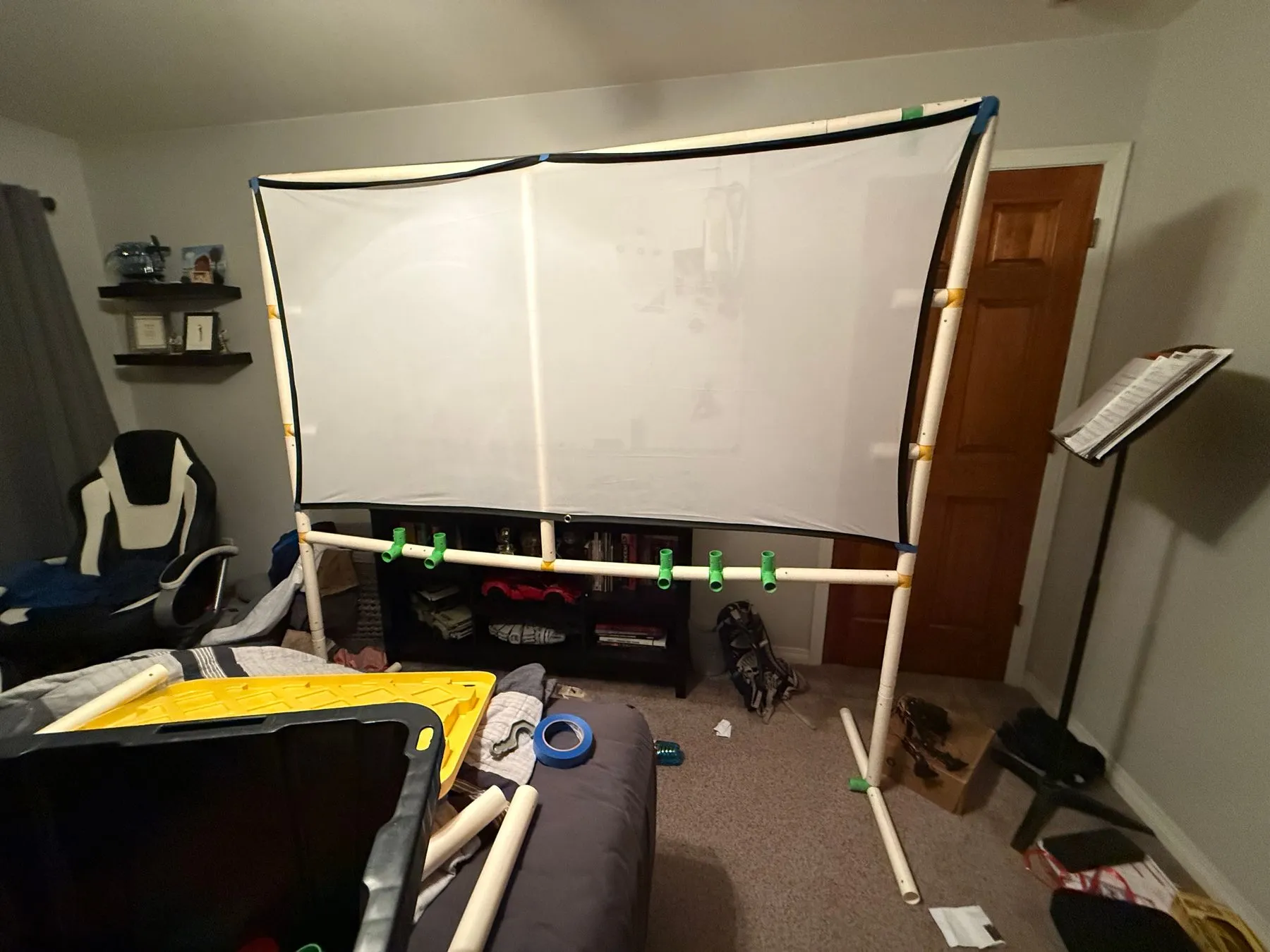
I started with a pipe-connecting toy kit to make the first design. It worked reasonably well, but it took up a lot of space and was hard to take apart quickly.
Design constraints
Because of the shortcomings of the first version, it became necessary to add constraints for the second draft. The three largest were:
- Quick and easy to assemble and disassemble
- Small and compact
- Cheaper than buying a screen online
CAD
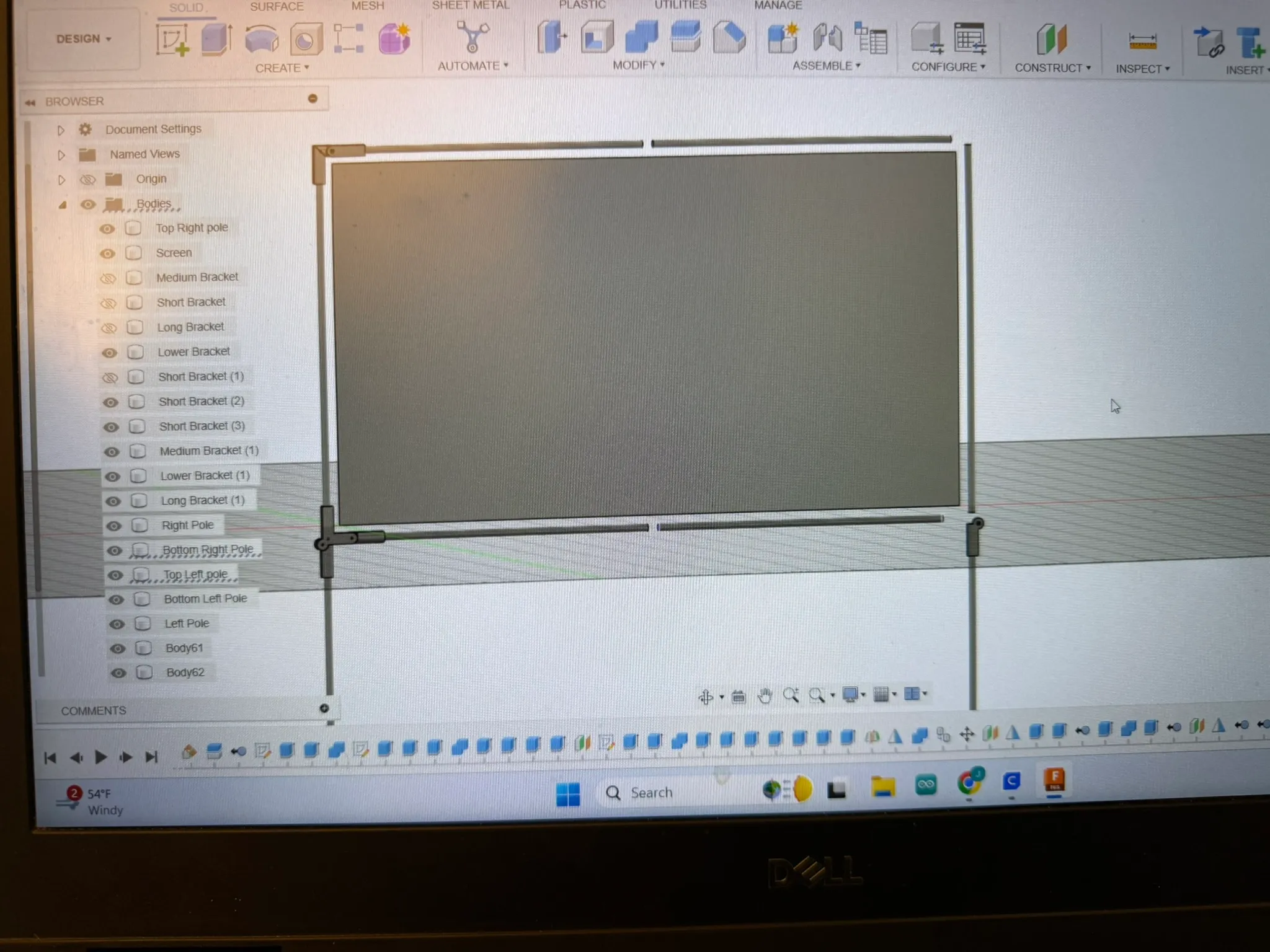
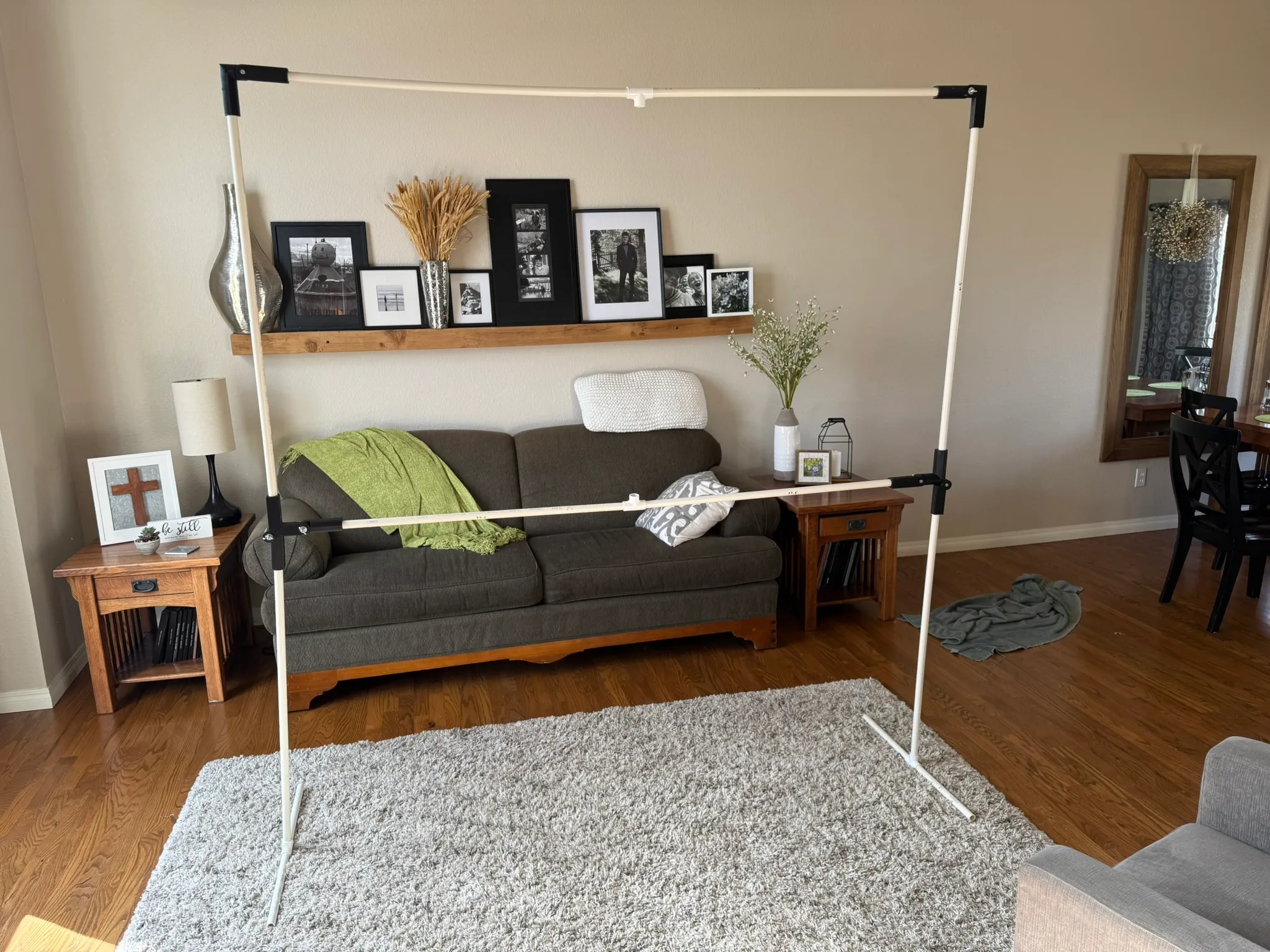
To address these problems, I started by making a design in Fusion 360. I made the body of the frame out of PVC, while the joints were custom 3D prints to make setup and teardown easier.
Building it
After designing and printing the parts, it was finally time to put it all together.
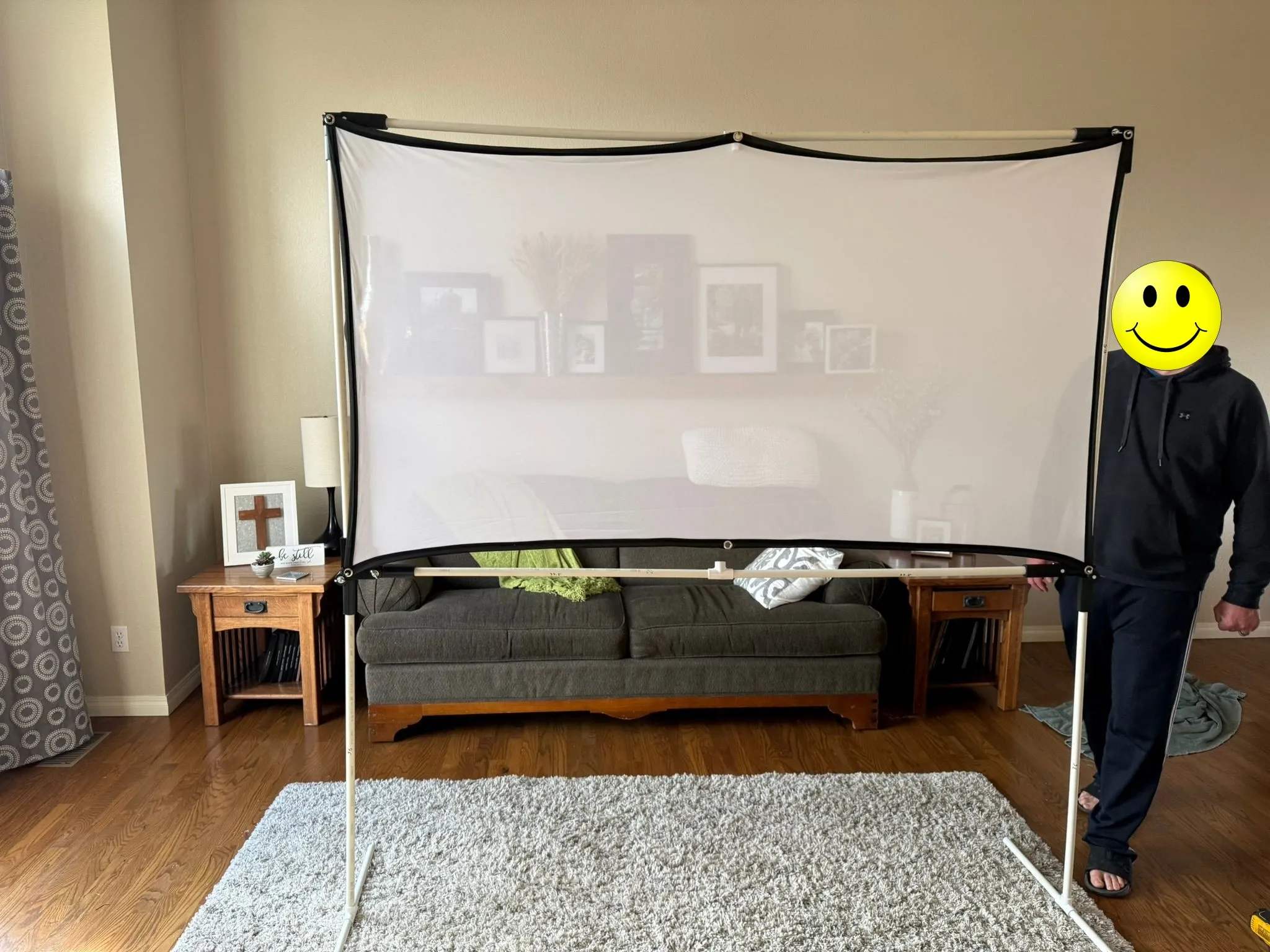
With the screen fitted, it’s a full 80-inch surface held flat and square.
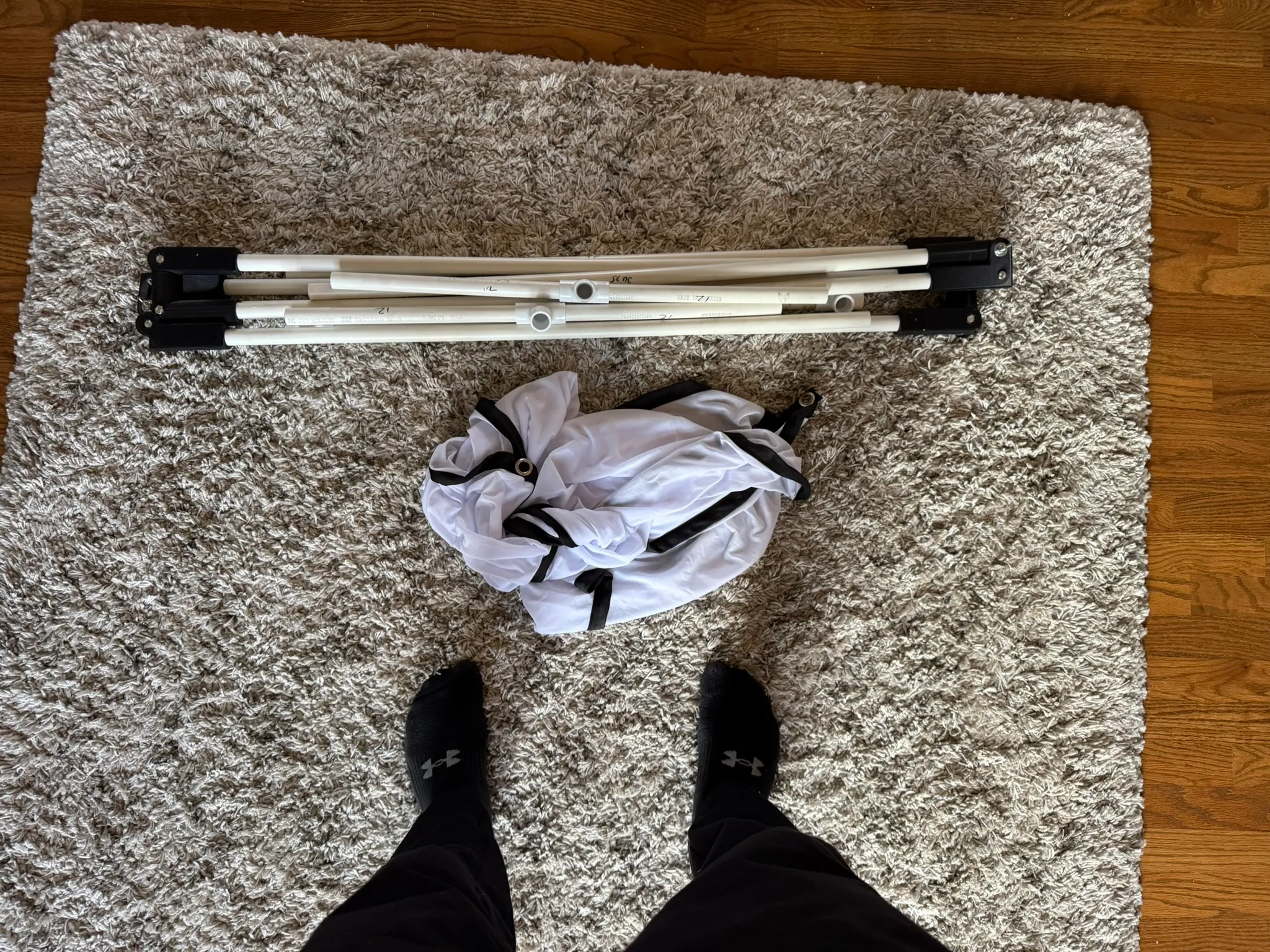
Packing down
The whole thing breaks down into a bundle of pipe that fits in the car alongside everything else.
Result
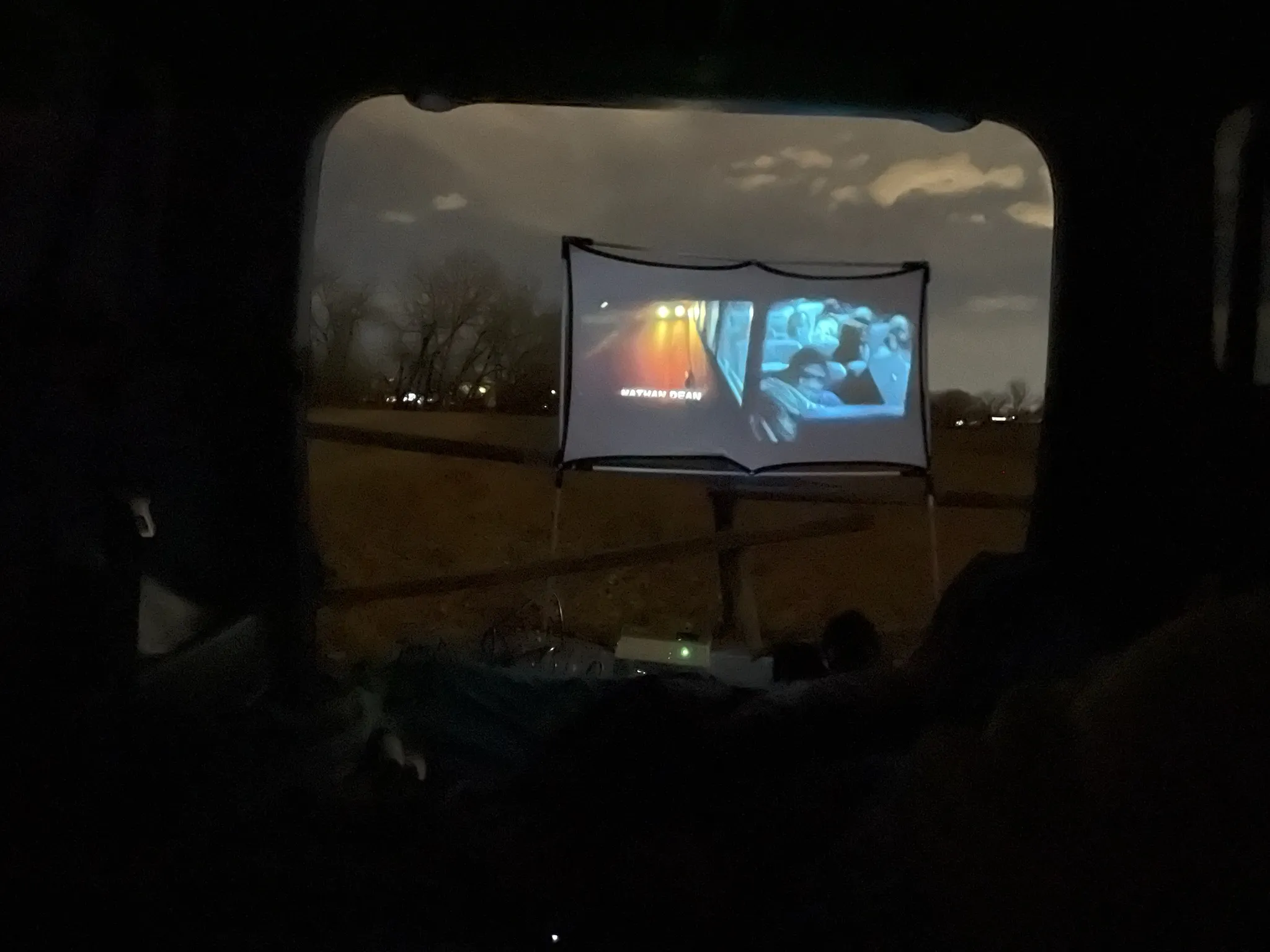
A working portable screen that sets up on flat ground and displays a movie clearly. Most importantly, it made for an amazing drive-in experience.
What I learned
This project taught me the value of placing constraints on a system before designing. The prototype worked for what we needed it to, but in reality we never would have used it again unless I had redesigned it around these constraints.
In the real world, this means listening to the client and empathizing with their situation before putting pen to paper. A fundamental understanding of the problem you are trying to solve leads to the best solutions.