← All projects

Escape the North Pole

A three-room Christmas escape room in MATLAB and Arduino, with a custom 3D-printed D-pad controller — I built the sleigh game, the CAD, and the electronics.

  • Arduino
  • MATLAB
  • 3D Printing
  • Leadership
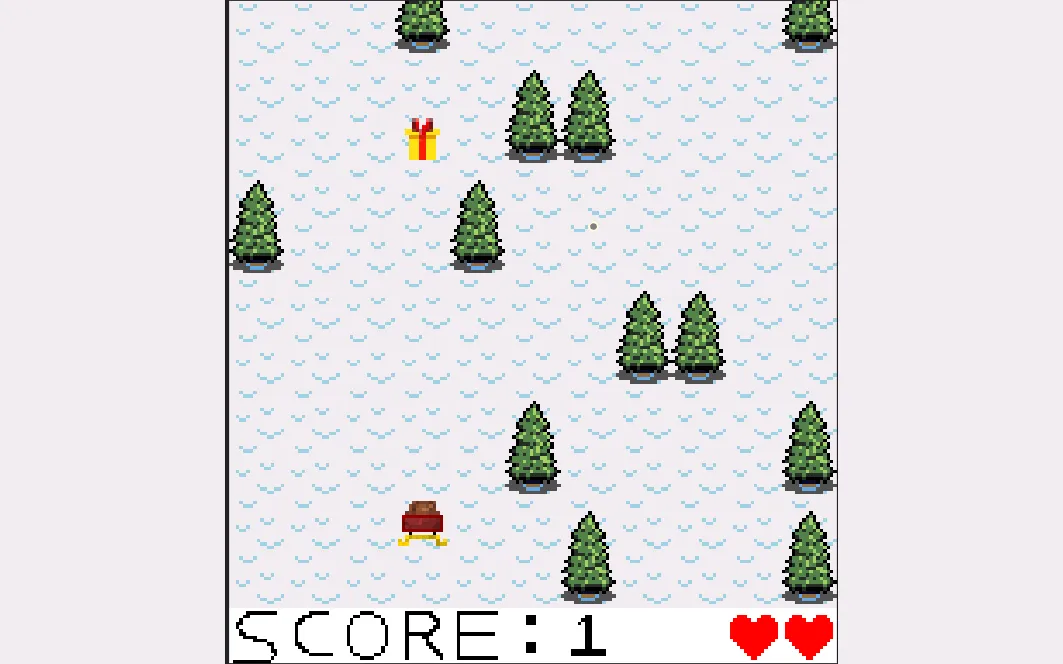
The sleigh game: a Santa sleigh dodging pine trees to collect presents, with score and remaining lives

The problem

Build a working escape room in six weeks with a four-person team, where the software and the hardware both have to hold up in front of an audience that gets exactly one attempt.

We built Escape the North Pole: three rooms, each a Christmas-themed task — make the toys, collect them, then deliver them to the children of Fort Collins.

My room: the sleigh game

The second room was mine.

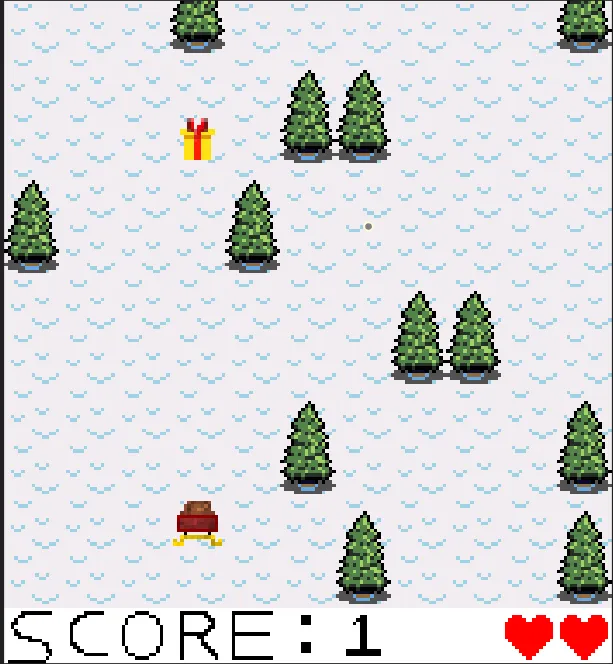
The sleigh game in play: the sleigh below, presents and pine trees scattered across the snow, score and lives along the bottom

You fly a sleigh, collect ten presents, and avoid the trees. Three lives, shown as hearts, and running out ends the run.

The design decision I’m happiest with is the smallest one: no trees spawn until the first present is collected. That gap gives a new player a few seconds to work out that the buttons steer the sleigh before anything can punish them for not knowing. It’s an unprompted tutorial that costs nothing and doesn’t interrupt the game — and it exists because watching someone play for the first time is very different from playing it yourself.

The other two rooms were a timed toy-assembly puzzle and a present-delivery round.

The toy maker room, where parts are ordered on a workbench against a one-minute timer

The controller

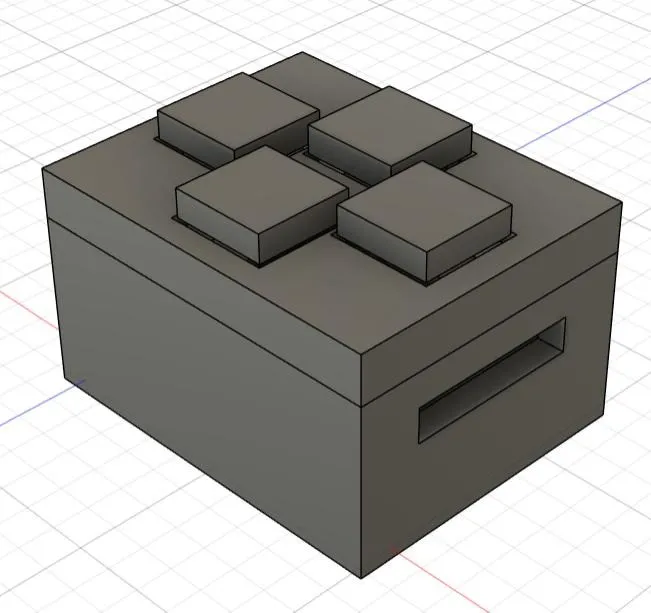
Players don’t touch a keyboard. Input is a custom 3D-printed D-pad I modelled in CAD: a base that houses the breadboard, four printed button caps, and a lid that captures them.

CAD model of the completed D-pad controller

The base has a slot in its side for the five wires — ground plus four data lines — so the cable exits cleanly rather than being pinched under the lid.

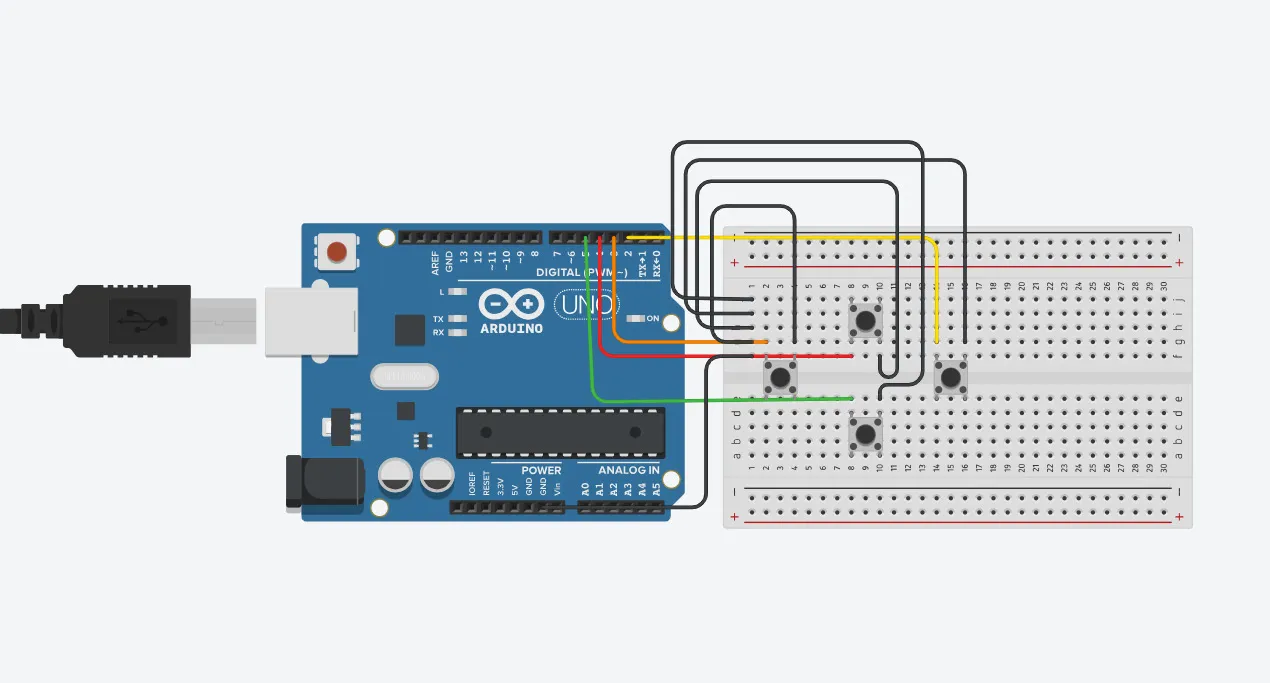
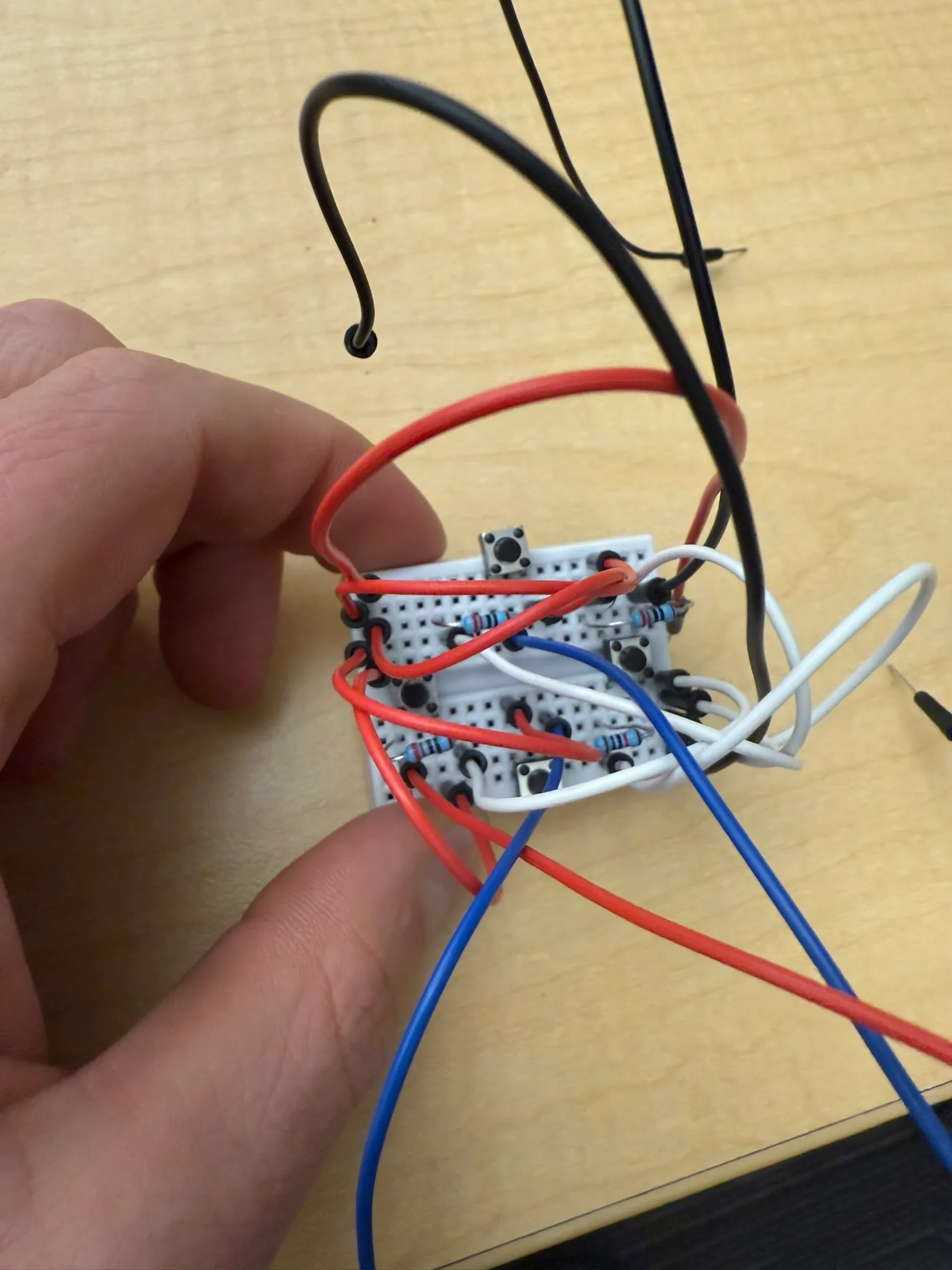
The circuit design for the controller

I laid the circuit out before wiring it and prototyped it on the bench, where a mistake costs a jumper wire instead of a rebuild.

Bench testing the circuit with the Arduino and breadboard

The assembled controller hardware

The tolerance on the printed buttons turned out to matter more than anything electrical. Printed too loose, a cap lifts out of the lid and comes away on the player’s finger — so the fix was wrapping tape around the narrow end of each button until the fit held. That’s the kind of detail that only shows up when someone who didn’t build it starts pressing things under time pressure.

The harder problem

The technical work wasn’t the real challenge. Partway through, it became clear the team wasn’t going to finish with its current makeup, and I had to remove an underperforming member and redistribute their work with the deadline unchanged.

That was the actual leadership challenge, and the part I learned most from — mostly that I waited longer than I should have to make the call, hoping the situation would correct itself.

Result

A finished, working escape room delivered on schedule, with a written user manual so someone else could set it up and run it without us in the room.