Driveway A/C Overhaul in Montana
Rebuilt my sister's car A/C in a rental driveway 700 miles from my garage: compressor, expansion valve, and condenser, recharged to spec by weight.
The situation
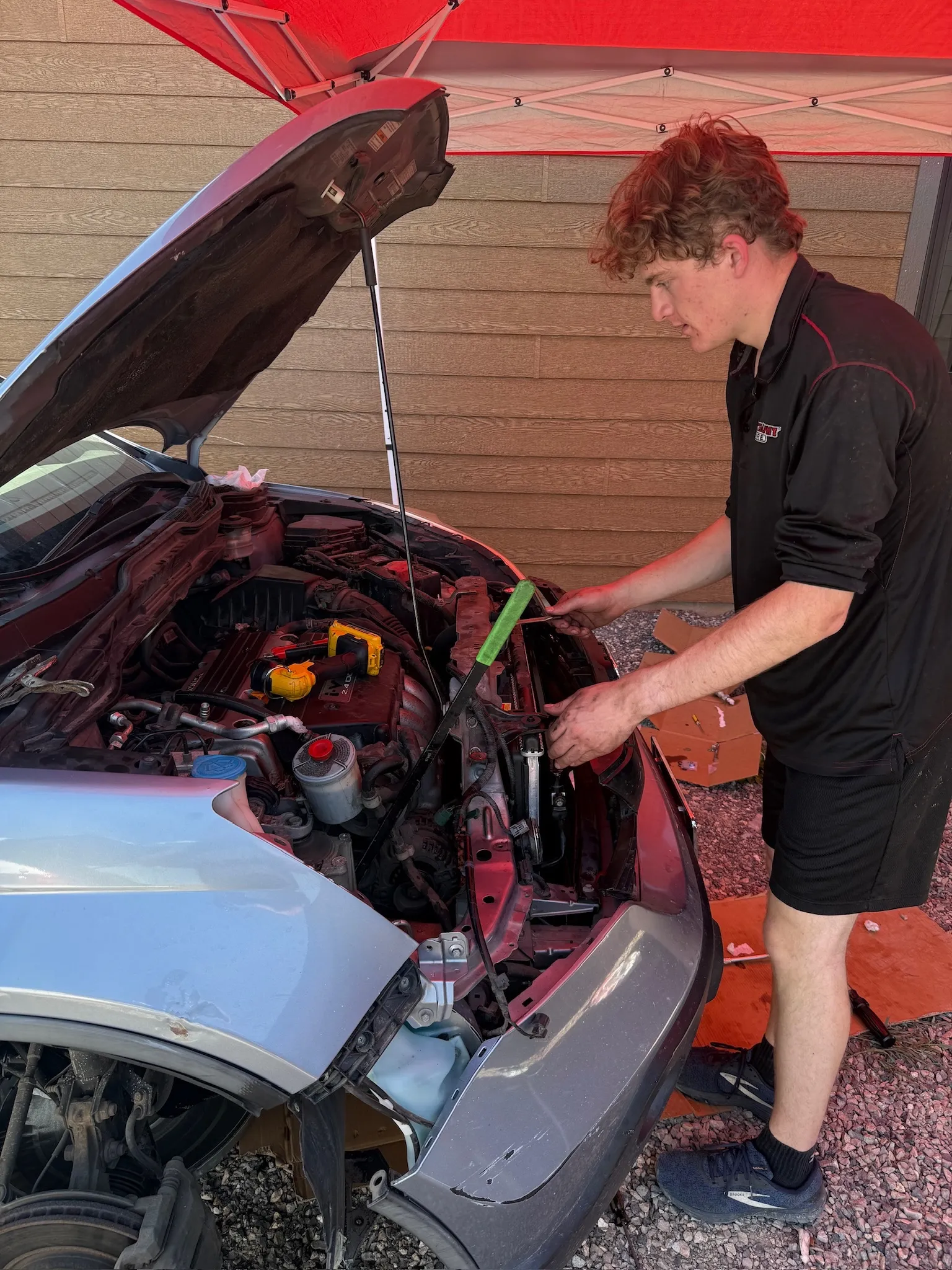
My sister lives in Montana, and her car’s air conditioning had quit blowing cold. A shop had already diagnosed it: a leaking and failed compressor.
The hardest part of this project was logistics, not diagnosis. We were meeting her partway through a family vacation, in a scenic part of Montana, tens of miles away from where she lives and hundreds away from my garage. Whatever the repair needed, it was going to happen in the driveway of a rental house, in one morning, with only the tools and supplies we brought with us from home.
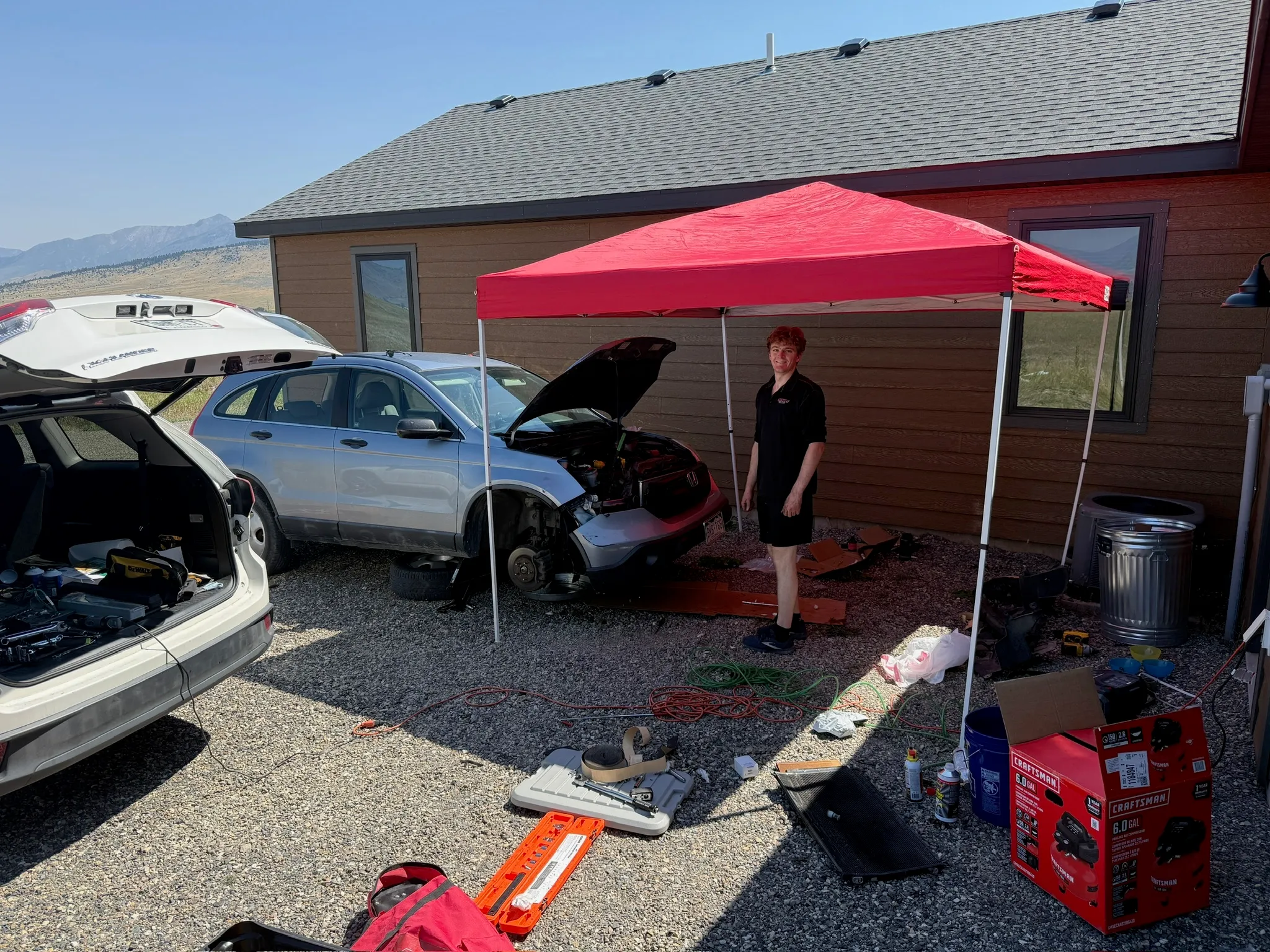
Everything in that photo traveled across the country with us in our SUV.
Finding the leak
Before doing the repair, I wanted to make sure the compressor was what had actually failed. The shop had said the leak was from the compressor itself, but I wanted to rule out a simple O-ring connection into the compressor.
Before anything came apart, I put UV dye through the system and went over it with a blacklight. Leaking dye fluoresces bright against everything around it, so the leak becomes easy to find.
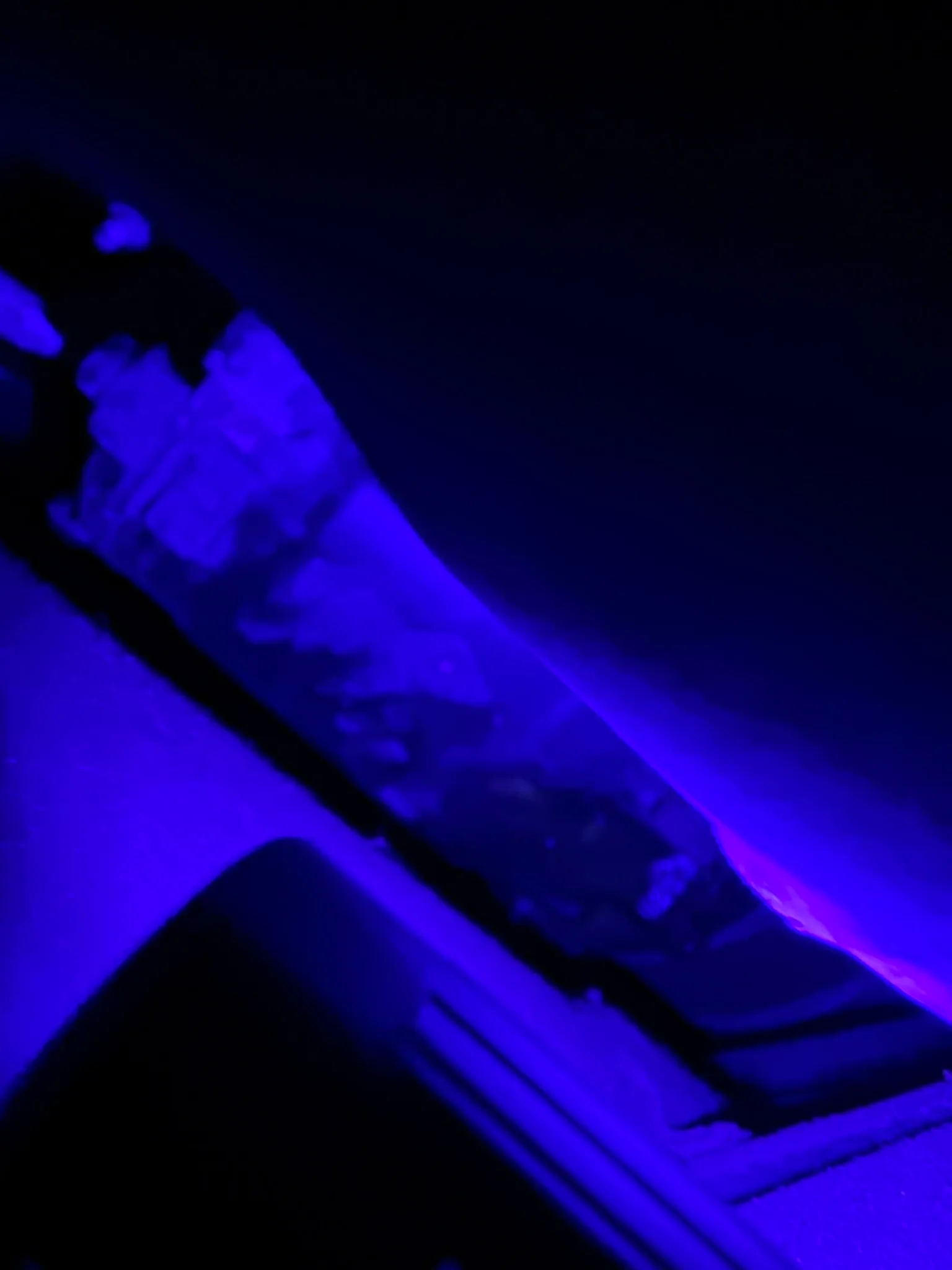
It is hard to see in this picture, but parts of the compressor were glowing green under the UV light. The leak was coming from the seals within the compressor, so I knew the whole unit had to be replaced.
The repair
In most cases of a failed compressor, shrapnel from the pump is sent through the entire A/C system. In order to clear this out, I needed to replace the condenser, the expansion valve, and the compressor, and to flush the entire system with a potent solvent to remove any debris from the failure.
Recharging by weight
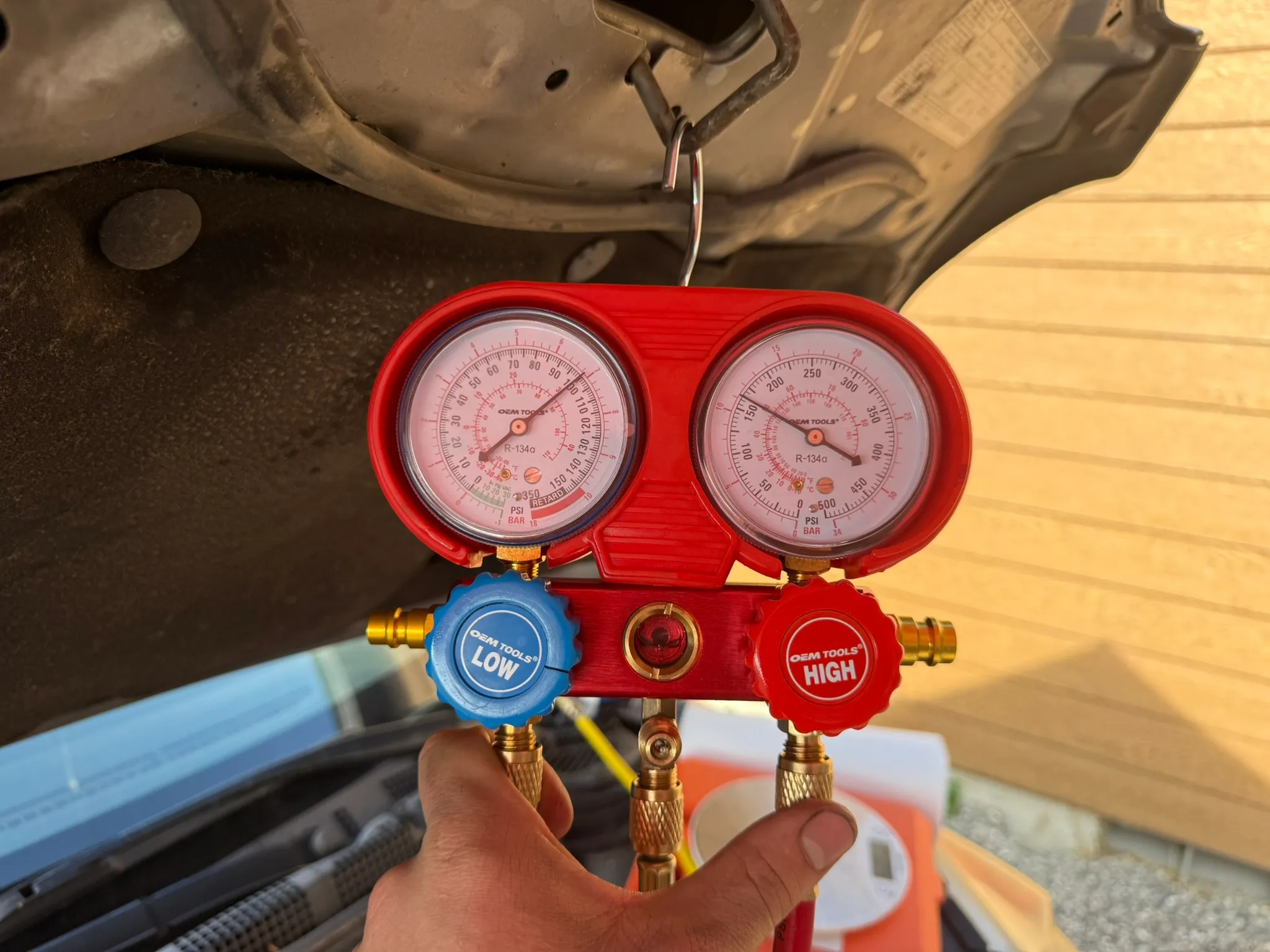
This is the most important step in the repair process. Recharging by pressure often leads to improper amounts of refrigerant being added, which compromises cooling performance and can cause more damage to the rest of the system.
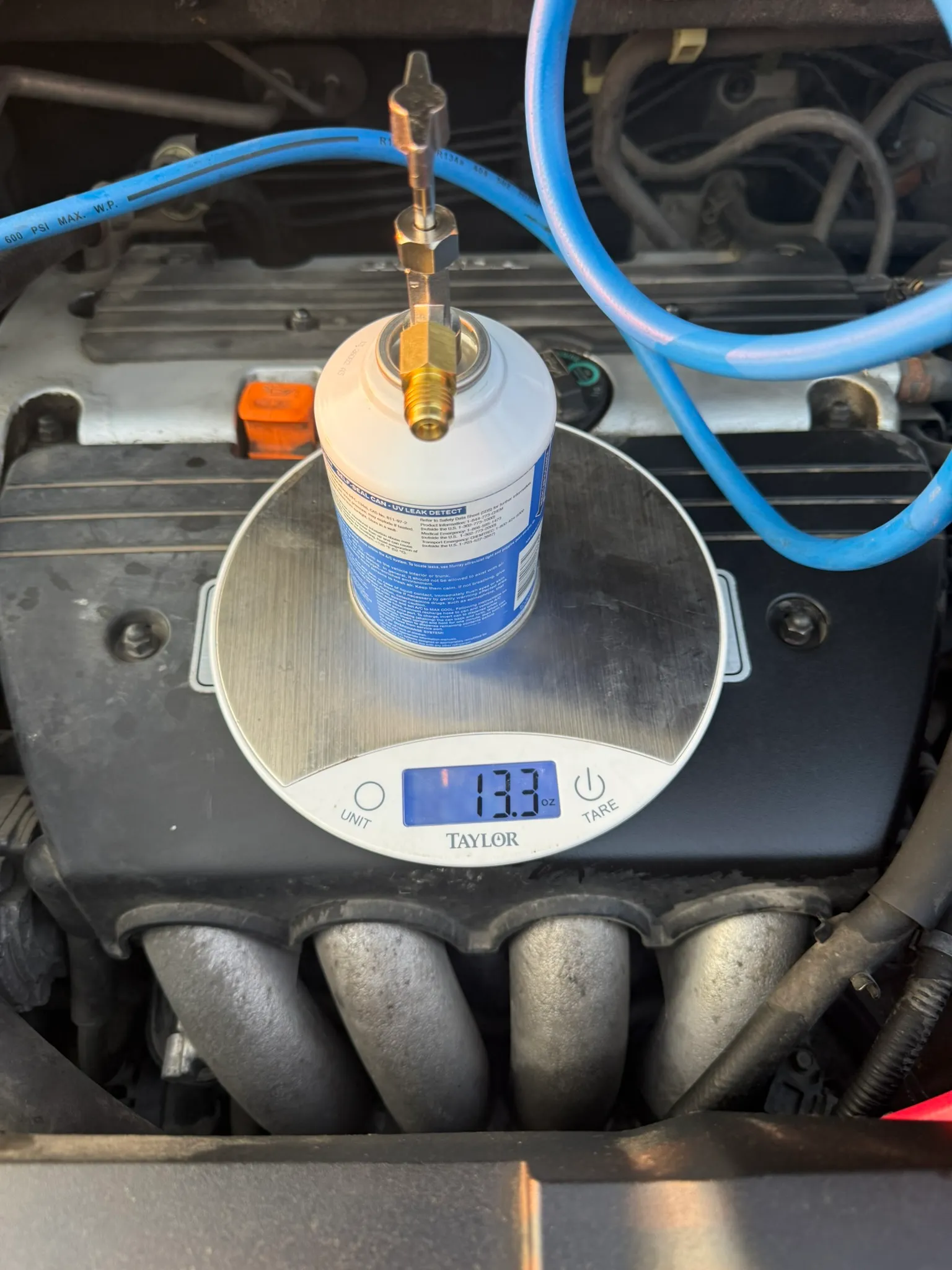
I pulled a vacuum on the system to remove any solvent or moisture, and charged the system by weight, using a kitchen scale to measure the proper amount of refrigerant.
What I learned
The engineering lesson I learned through this project was not really about design, but rather about strategic planning. If I had not done the proper research and preparation beforehand, this repair would never have been completed, and my sister would still be without A/C.
Getting hands-on experience with refrigerant cycles was a bonus for this project. I had seen a P-h diagram in class once before, but being able to tangibly see and feel what was happening gives me a deeper knowledge of the complex thermodynamics at play in an A/C system.